ABA, OT, and Speech Therapy: What's the Difference?
Your child's evaluation recommended three different therapies. Here's what each one does—and why they often work best together.
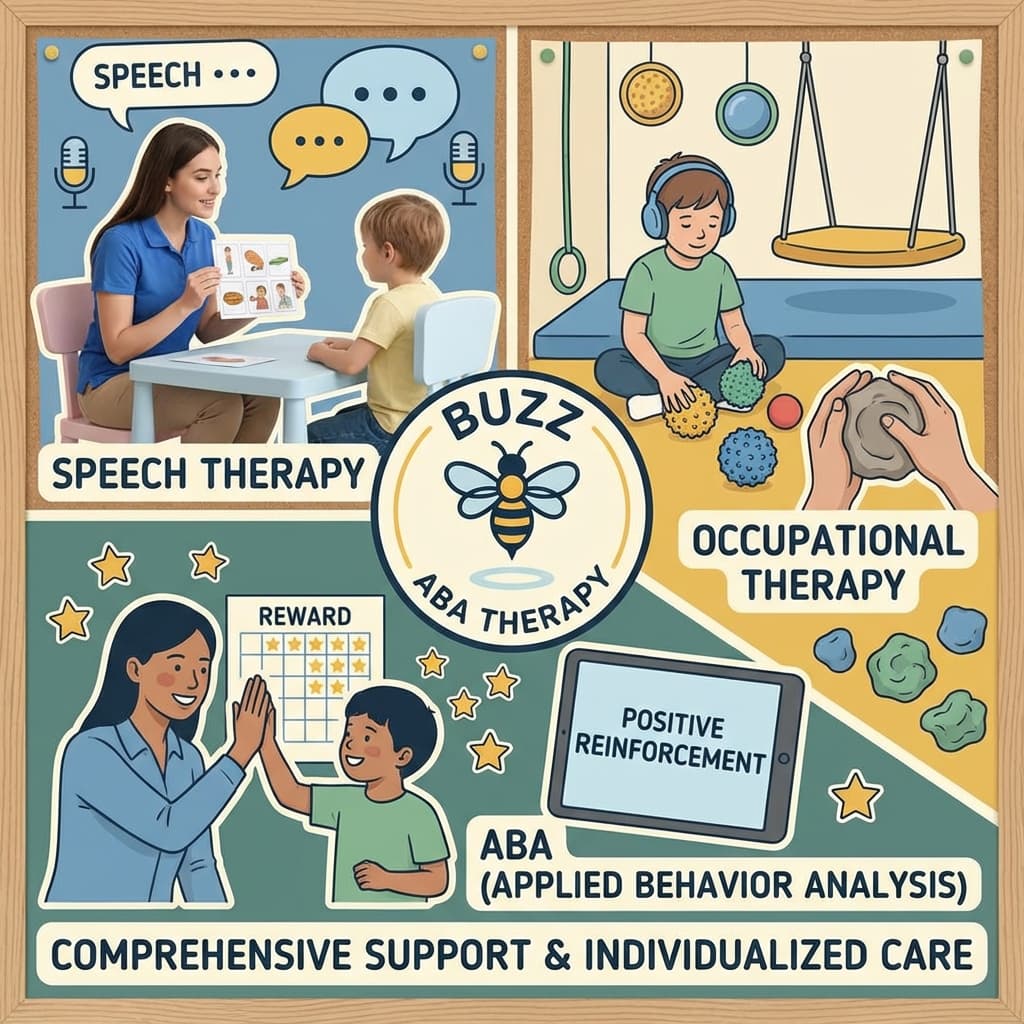
If you've recently received an autism diagnosis for your child, you've probably heard recommendations for ABA therapy, occupational therapy (OT), and speech therapy. It can feel overwhelming—especially when you're not sure what makes them different or why your child needs all three.
The good news? These therapies aren't competing—they're complementary. Each addresses different aspects of development, and together, they create a comprehensive support system for your child.
Quick Comparison Table
| Therapy Type | Primary Focus | Who Provides It |
|---|---|---|
| ABA Therapy | Behavior, learning, social skills, independence | BCBA, RBT |
| Occupational Therapy | Sensory processing, fine motor, daily living | OT, OTA |
| Speech Therapy | Communication, language, articulation | SLP |
1. ABA Therapy (Applied Behavior Analysis)
What It Is
ABA is the science of learning and behavior. It uses evidence-based techniques to teach new skills and reduce behaviors that interfere with learning or safety.
What ABA Addresses:
- Behavior: Reducing aggression, self-injury, tantrums, elopement
- Social Skills: Turn-taking, sharing, making friends, reading social cues
- Communication: Requesting needs, answering questions, conversation
- Daily Living: Toileting, dressing, eating independently
- Academic Readiness: Following instructions, sitting at a desk, completing tasks
Example:
A child who hits when frustrated learns to use words or a communication device to ask for a break instead. The BCBA identifies why the hitting happens and teaches a replacement behavior.
2. Occupational Therapy (OT)
What It Is
OT helps children develop the skills needed for daily "occupations" (activities). For kids, this means play, self-care, and school tasks.
What OT Addresses:
- Sensory Processing: Helping with over- or under-sensitivity to sounds, textures, lights
- Fine Motor Skills: Handwriting, using utensils, buttoning clothes
- Gross Motor Coordination: Balance, body awareness, coordination
- Self-Regulation: Calming strategies when overwhelmed
- Visual-Motor Integration: Copying shapes, cutting with scissors
Example:
A child who refuses to wear certain clothes because of texture sensitivity works with an OT on desensitization activities and learns coping strategies for uncomfortable sensations.
3. Speech Therapy (Speech-Language Pathology)
What It Is
Speech therapy focuses on all aspects of communication—not just talking, but also understanding language, using gestures, and social communication.
What Speech Therapy Addresses:
- Articulation: Pronouncing sounds and words clearly
- Expressive Language: Using words, sentences, grammar
- Receptive Language: Understanding what others say
- Pragmatics: Social use of language (greetings, staying on topic)
- AAC Devices: Teaching use of communication apps or picture systems
Example:
A nonverbal child learns to use an AAC device to request snacks, answer yes/no questions, and eventually build sentences. The SLP also works on understanding "wh-" questions.
Where They Overlap (And Why That's Good!)
ABA + Speech Therapy
Both work on communication. The SLP might teach how to form sounds, while the BCBA teaches when and why to use those words functionally (e.g., requesting vs. labeling).
ABA + OT
Both address daily living skills. The OT might work on the motor skills for buttoning a shirt, while the BCBA works on the motivation and independence to do it without prompting.
OT + Speech Therapy
Both might address oral motor skills (chewing, swallowing) or sensory issues that affect communication (e.g., sensitivity to certain sounds).
The best outcomes happen when these teams collaborate and share goals!
Does My Child Need All Three?
Not necessarily—but many children benefit from a combination. Here's how to think about it:
Primarily ABA if:
- Severe behavior challenges
- Need for intensive skill-building
- Limited independence
Add OT if:
- Sensory sensitivities
- Fine/gross motor delays
- Difficulty with self-care
Add Speech if:
- Nonverbal or limited speech
- Articulation issues
- Difficulty understanding language
Ready to Build Your Child's Team?
At Buzz ABA, we collaborate closely with OTs and SLPs to ensure your child gets comprehensive, coordinated care. Serving families throughout Concord, Manchester, Nashua, and beyond. Let's talk about what your child needs.
Schedule Free Consultation